Rebar Sizes Explained: A Guide to Rebar Numbers and Diameters
Rebar is labeled with numbers like #3, #4, and #5 that describe its diameter, not an arbitrary size code. Here’s how to read rebar sizing and choose the right bar for footings, slabs, and columns.
How Rebar Numbering Works
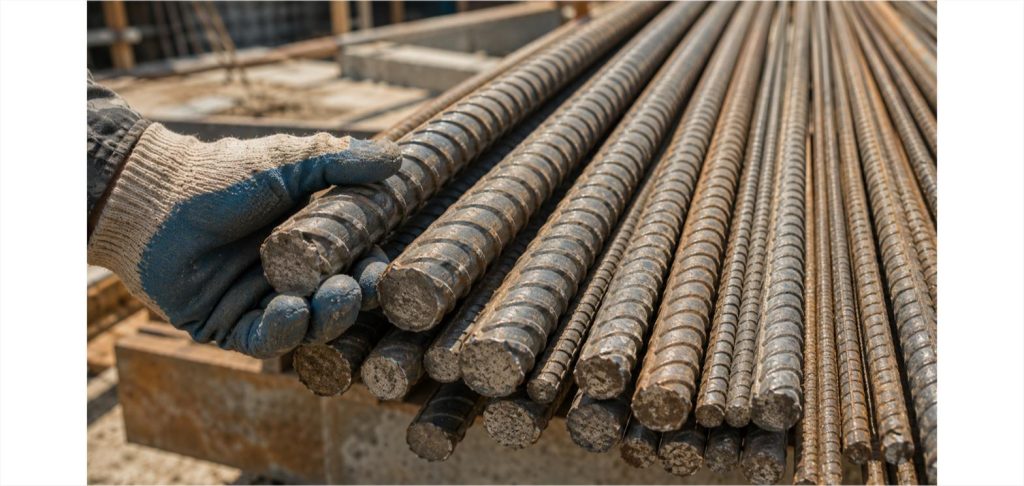
Rebar sizes in the US are labeled with a number, such as #3, #4, or #5, and that number corresponds to the bar’s diameter measured in eighths of an inch. A #3 bar is 3/8 inch in diameter, a #4 bar is 4/8 (or 1/2) inch, and a #5 bar is 5/8 inch. This simple relationship continues up through larger structural sizes, though residential projects rarely need anything beyond #3 to #5 bar.
Common Rebar Sizes and Typical Uses
- #3 (3/8 in): Light-duty applications, small footings, and some mesh-alternative uses in patios.
- #4 (1/2 in): The most common residential size, used in footings, driveways, and structural slabs.
- #5 (5/8 in): Heavier structural footings, retaining walls, and columns carrying significant load.
- #6 and above: Larger structural and commercial applications, typically specified by an engineer.
Rebar Grade: Strength Matters Too
Beyond diameter, rebar is also classified by grade, which indicates its yield strength — the amount of stress it can handle before permanently deforming. Grade 40 and Grade 60 are the most common in residential and light commercial construction, with Grade 60 offering higher yield strength and being the more widely available standard in most markets today. Always check project specifications or local code if a specific grade is required, particularly for any structural or engineered application.
Choosing the Right Size for Your Project
For most residential DIY projects — patio slabs, walkways, small footings, and fence posts — #3 or #4 rebar is generally sufficient, often paired with or substituted by welded wire mesh for lighter-duty slabs. Driveways and structural wall footings commonly step up to #4 bar, sometimes doubled up or spaced more tightly for added strength. Anything load-bearing for a structure, deck, or retaining wall should follow an engineer’s specification or local building code rather than a generic size guideline, since undersized reinforcement is a genuine structural risk.
Spacing and Placement
Rebar is typically placed on a grid pattern, with spacing between bars specified by project type — commonly 12 to 18 inches on center for residential slabs and footings, though this varies by load and local code. Bars should be positioned within the concrete, not resting on the base material, which is why rebar chairs or blocks are used to hold the steel suspended at the correct height as concrete is poured around it.
Rebar vs Wire Mesh: When to Use Each
Welded wire mesh is generally easier to work with for lighter-duty slabs like patios and walkways, since it comes in rolls or sheets that are simple to cut and position. Rebar offers more tensile strength per piece and is the standard choice for footings, driveways, and any structural application carrying meaningful load. Some projects use both — rebar in a footing, transitioning to mesh in an adjoining lighter-duty slab.
Cutting and Bending Rebar
Rebar can be cut with a bolt cutter (for smaller sizes like #3 or #4) or an angle grinder with a metal cutting wheel for larger sizes, and bent using a manual rebar bender for custom shapes like corner ties or stirrups. Always wear appropriate safety gear when cutting or bending rebar, since it can produce sharp edges and metal shavings.
Where Rebar Sizing Matters Most
Getting rebar size right matters most on structural elements like footings and columns, where reinforcement directly affects the structure’s ability to carry load safely over time. For lighter-duty projects like a decorative patio, wire mesh is often perfectly adequate, but when in doubt, check your local building code or consult an engineer before finalizing your reinforcement plan.