5 Signs of Bad or Weak Concrete (And How to Avoid Them)
Not all concrete pours turn out the way they should. Here are five warning signs that a mix or pour may be weaker than it should be, what typically causes them, and how to avoid these problems on your next project.
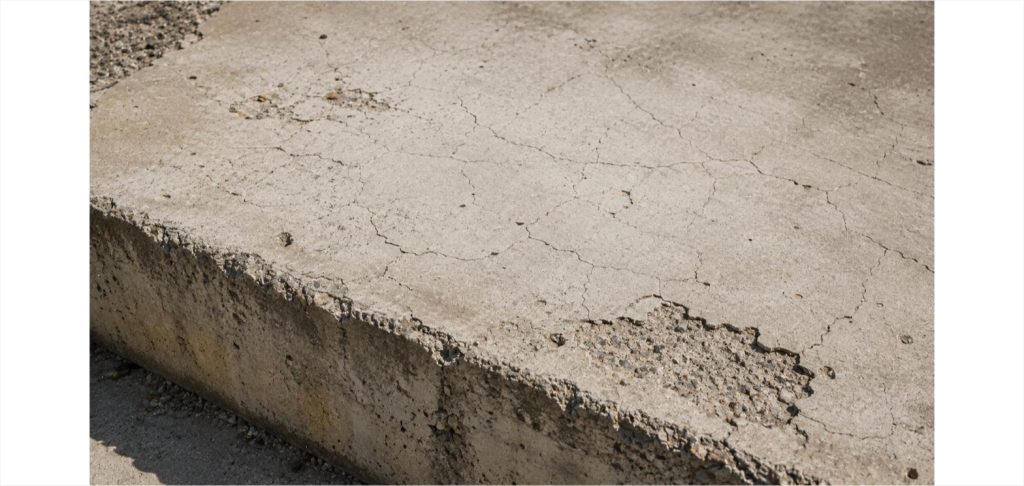
1. Surface Cracking (Crazing)
Fine, hairline cracks across the surface — sometimes called crazing — usually indicate the surface dried out too quickly during finishing or curing, before the concrete had a chance to gain strength evenly. This is often caused by finishing concrete in hot, windy, or low-humidity conditions without proper curing measures like curing compound or wet coverings. It’s typically a surface-level cosmetic issue rather than a structural one, but it’s a clear sign that curing practices need improvement on future pours.
2. Dusty or Chalky Surface
If the surface of cured concrete produces a fine dust when swept or rubbed, this often points to a weak surface layer, commonly caused by excess water in the mix, finishing too early while bleed water is still present, or inadequate curing. A properly mixed and cured concrete surface should be hard and resistant to abrasion, not powdery.
3. Spalling and Scaling
Spalling (chunks breaking away from the surface) and scaling (flaking of the top layer) are common in cold climates and are often linked to inadequate air-entrainment in the mix, allowing freeze-thaw cycles to damage the surface from the inside out. Deicing salts can accelerate this damage further. Choosing an air-entrained mix appropriate for your climate, as discussed in our Concrete Basics Guide, helps prevent this over the long term.
4. Excessive or Uneven Cracking
While some shrinkage cracking is normal in concrete, especially without control joints, excessive or uneven cracking — particularly cracks that are wide, growing, or offset (one side higher than the other) — can indicate a more serious issue like inadequate base preparation, insufficient reinforcement, or a structural settlement problem. Cracks like this are worth having assessed, especially on structural elements like footings or foundation walls.
5. Low Strength or Soft Concrete
Concrete that seems unusually soft, crumbly, or that fails to reach expected hardness even after a full curing period, often points back to a mix that had too much water added during placement, was placed in conditions too cold for proper hydration, or wasn’t proportioned correctly in the first place. This is one of the strongest arguments for following the water ratio on bagged mixes precisely and avoiding the temptation to add extra water for easier mixing or placement.
How to Avoid These Problems
- Follow the water-to-cement ratio specified on your mix precisely, resisting the urge to add extra water.
- Choose the correct PSI and air-entrainment level for your project and climate.
- Prepare a compacted, stable base before pouring, and use reinforcement where appropriate.
- Cure new concrete properly — keep it moist and protected during the first several days.
- Avoid pouring in extreme heat or freezing temperatures without adjusting your approach.
When to Call a Professional
If you notice significant, growing, or offset cracking on a structural element like a footing or foundation wall, it’s worth having it assessed by a qualified contractor or engineer rather than assuming it’s cosmetic. For most residential DIY projects like patios, walkways, and small footings, following solid mix, base preparation, and curing practices — covered in our Concrete Basics Guide and individual calculator pages — will help you avoid the majority of common concrete problems.